Beyond Self-Care: Building a Structural Safety Net for Nonprofit Resilience
May is Mental Health Awareness Month in the United States. It feels like everyone talks about mental health these days, and the onslaught of solutions feels just as overwhelming as the world. As an HR practitioner, it can be confusing at times to know how to help employees. It’s becoming even more difficult to know where the organization’s responsibility ends and an employee’s responsibility begins.
A lot of different terms are used in this space – mental health, wellbeing, mental wellness, whole body health. For this writing, I’m using the term “mental wellness” because I see a direct impact between mental wellness and performance. Mental wellness is a proactive, dynamic state where you can realize your potential, cope with the normal stresses of life, and contribute meaningfully to your community.
When I started my corporate career in the late 1990s, you did not talk about your mental health at all. However, things have changed significantly in the last 30 years (thankfully). Younger generations continue to push for honest conversations about mental wellness and expect workplaces to support them. This shift isn't just about "being nice"—it's a fundamental response to the changing nature of work. As the global economy moved from manual labor (physical output) to knowledge work (cognitive output), the brain became the primary "tool of production."
If an employee’s brain isn't functioning optimally, the business suffers a direct hit to its core assets. Research consistently shows that humans do not have 8 hours of peak cognitive output per day. Most people have about 3–4 hours of "deep work" capacity. Organizations that ignore mental wellness often try to force 8+ hours of high-intensity output, which leads to diminishing returns and eventual system failure (burnout).
In my consulting work, I see organizations support mental wellness in a myriad of ways, which I will share here. Additionally, it’s important to note that mental wellness includes multiple levels of personal work while also multiple levels of team and organization work. This level of design to support mental wellness takes time and continued support at every level. Mental wellness starts with the individual placed inside a living ecosystem (the organization) that evolves over time. You ready?
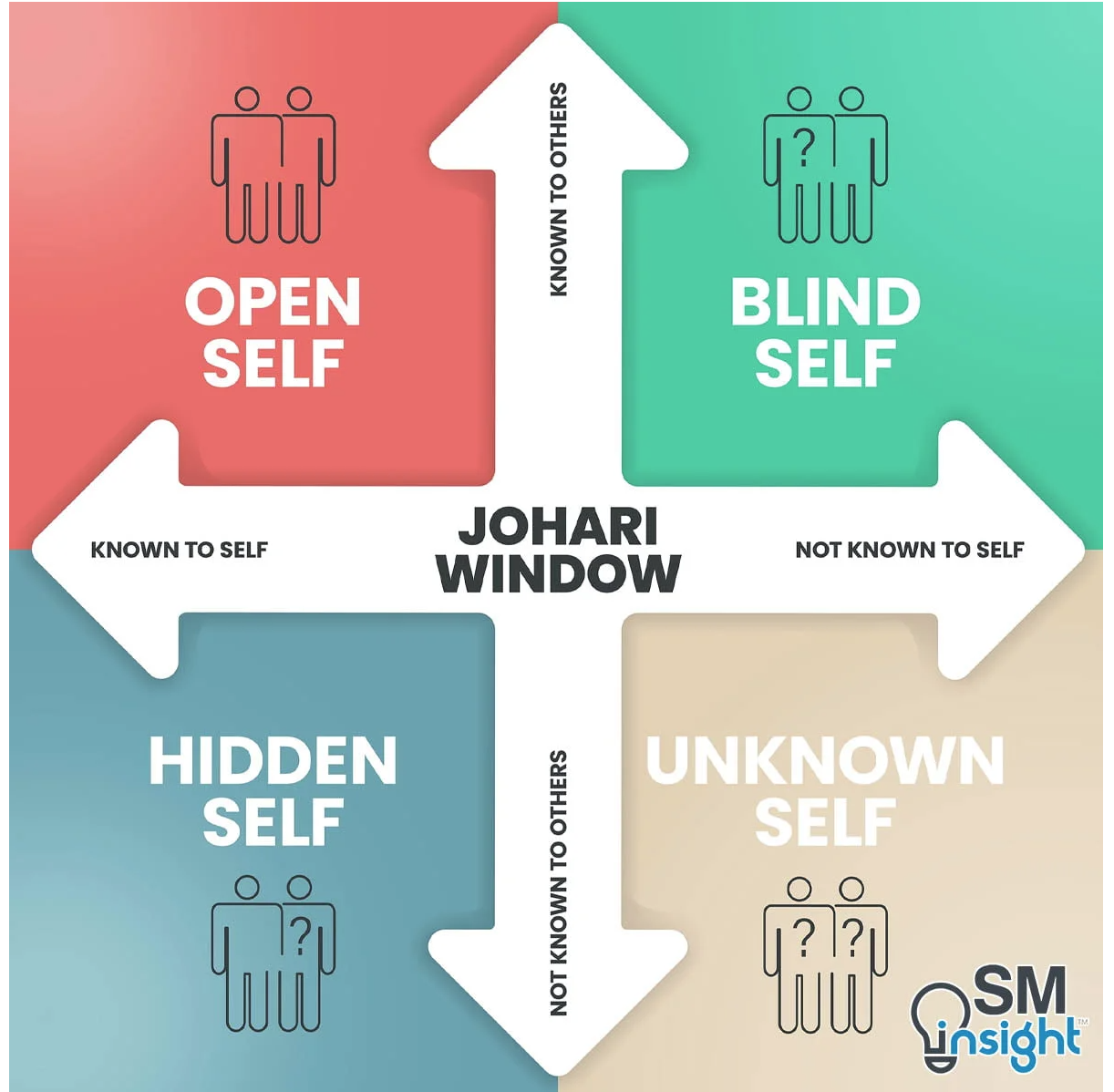
The Johari Window is a great tool for building self-awareness
First, I want to emphasize an important concept for the workplace. YOU are responsible for yourself. Your employer is responsible for creating a safe workplace where employees can thrive; however, you still contribute to that environment as an individual. You must take responsibility for your mental wellness because employers can only do so much.
If mental wellness is a proactive, dynamic state where you can realize your potential, cope with the normal stresses of life, and contribute meaningfully to your community, then you’ve got to know your potential, build coping skills, and seek out ways to contribute. This doesn’t come easily for everyone because we so rarely focus on a critical skill – growing in self-awareness.
Self-awareness is the "diagnostic tool" of mental wellness. Without it, you are effectively a passenger to your own biological and emotional impulses. With it, you gain the ability to intervene in your own mental processes before they spiral. It functions as the bridge between reacting to a situation and responding to it. It’s the pause before reacting. And that pause can mean everything in tense situations.
Here are three ways to build self-awareness:
1. Pause and reflect. Start with 60 seconds to review the day or a recent meeting where you felt emotions. What happened? Who was there? What were you thinking internally but didn’t say? How did your body feel in that moment? Just note the observations. No judgement. No action. Do this for a week and see if you identify any patterns.
2. Build your emotional intelligence. I am not a person who can naturally identify my emotions in the moment, so I’ve had to work REALLY hard to build a vocabulary for emotions and identify them in my body. The practice here is identifying daily for a week what emotions you felt that day. I use a feelings sensation wheel to broaden my vocabulary. Again, do this for a week and see if you identify any patterns. No judgement. Just be curious.
3. Ask for feedback. This is where things can get dicey if you don’t trust the people in your life. I encourage you to start with previous performance reviews and comments about your behavior that have lingered in your head. What themes are coming up for you? Focus on the theme. Develop a specific question about the theme. Then start asking for feedback from people you trust. FYI – if you only trust people that never confront you, that’s a theme.
It’s also important to note that mental wellness is directly linked to physical wellness. Start with your routines around basic needs (ex. Food, rest, etc.). Additionally, therapists and support groups are great places to build self-awareness and community. I’ve been in and out of therapy since I was 15. Finally, don’t be afraid to pursue medication for your mental health. I started an anxiety medication about 15 years ago. I didn’t know how much anxiety I was experiencing until I started that medication. It’s been a game changer for me.
Self-Awareness Tool: Johari Window
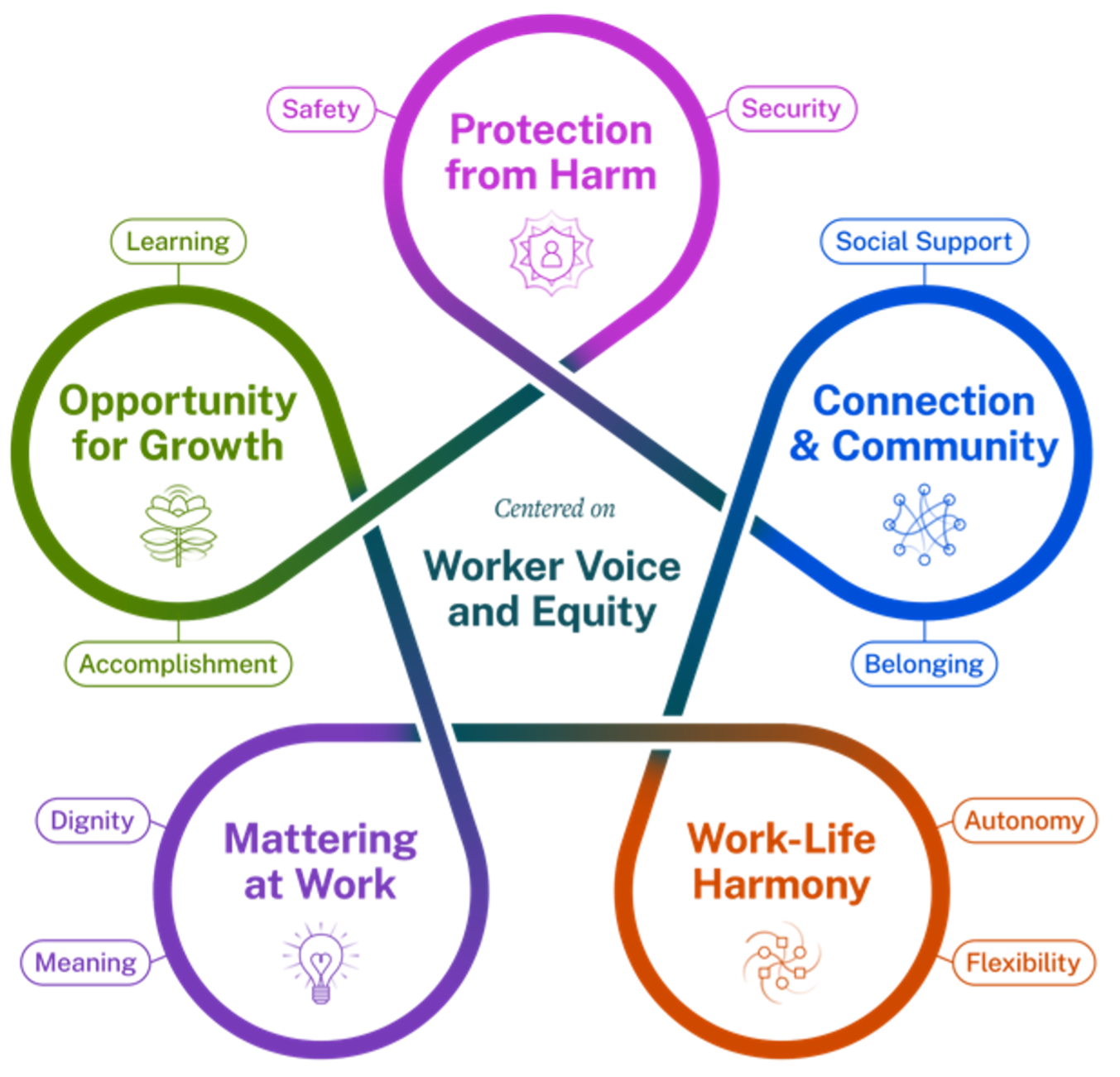
This graphic by Dr. Vivek Murthy reflects the different levels of mental wellness in the workplace.
When you bring a group of individuals with varying levels of mental wellness into the workplace, sparks are going to fly. It may be sparks of creativity or connection or conflict or all of the above. That’s why it’s important to have team mental wellness practices.
Boosting team mental health isn't just about "wellness days" or perks; it's about reducing the friction in how work gets done. High stress often stems from ambiguity, isolation, and the "always-on" culture. To move the needle, a team needs to move from individual coping to collective architecture.
Let’s be real – supervisors are not therapists or experts on mental wellness. And I’ll discuss the organization practices that need to be in place to support teams in the next section. However, every supervisor has access to practices that promote clarity and openness. Research consistently shows that autonomy and predictability are the two biggest buffers against workplace burnout. Here are a few:
1. Analyze your meeting structure. We can get stuck in a meeting culture that could really be an email or asynchronous update document. Great meetings offer connection time, space to reflect and learn from each other, and time to plan. Build practices where items to be reviewed are sent ahead of time so meetings are focused on generative discussion. In fact, implementing a “no meeting” day is a great mental wellness practice for teams.
2. Get clear on workday expectations. It’s easy to always be “on” when you are working remotely and/or have teammates working across time zones. Co-create expectations within your team around communication. Audit the different ways that you communicate as a team – text, virtual meetings, online chats, emails. Then set expectations on response times. For instance, when a chat is sent after work hours, what is the expectation for a response? You might be surprised by how often your employees pay more attention to how and when a supervisor responds versus what the expectation might be. Everyone needs to model their expectations.
3. Implement regular energy checks. This is where some of you might wonder if this is crossing into therapy territory. And no, it is not. The practice here is conducting a weekly or monthly energy check with your team. Think of the different ways that a person’s energy may be affected. For instance, I am currently working double time right now so I can take several days off around my son’s upcoming high school graduation. I don’t want to be consumed with work and unable to focus on him during this time. In a team environment, I could share that as part of my energy check-in and ask teammates to respect my time off in the coming weeks. The energy check is simply helping people identify potential obstacles and finding support within the team.
Team Tool: The 5 Energy Check-Ins for your next meeting | by Vandana Chandrasekharan | Medium
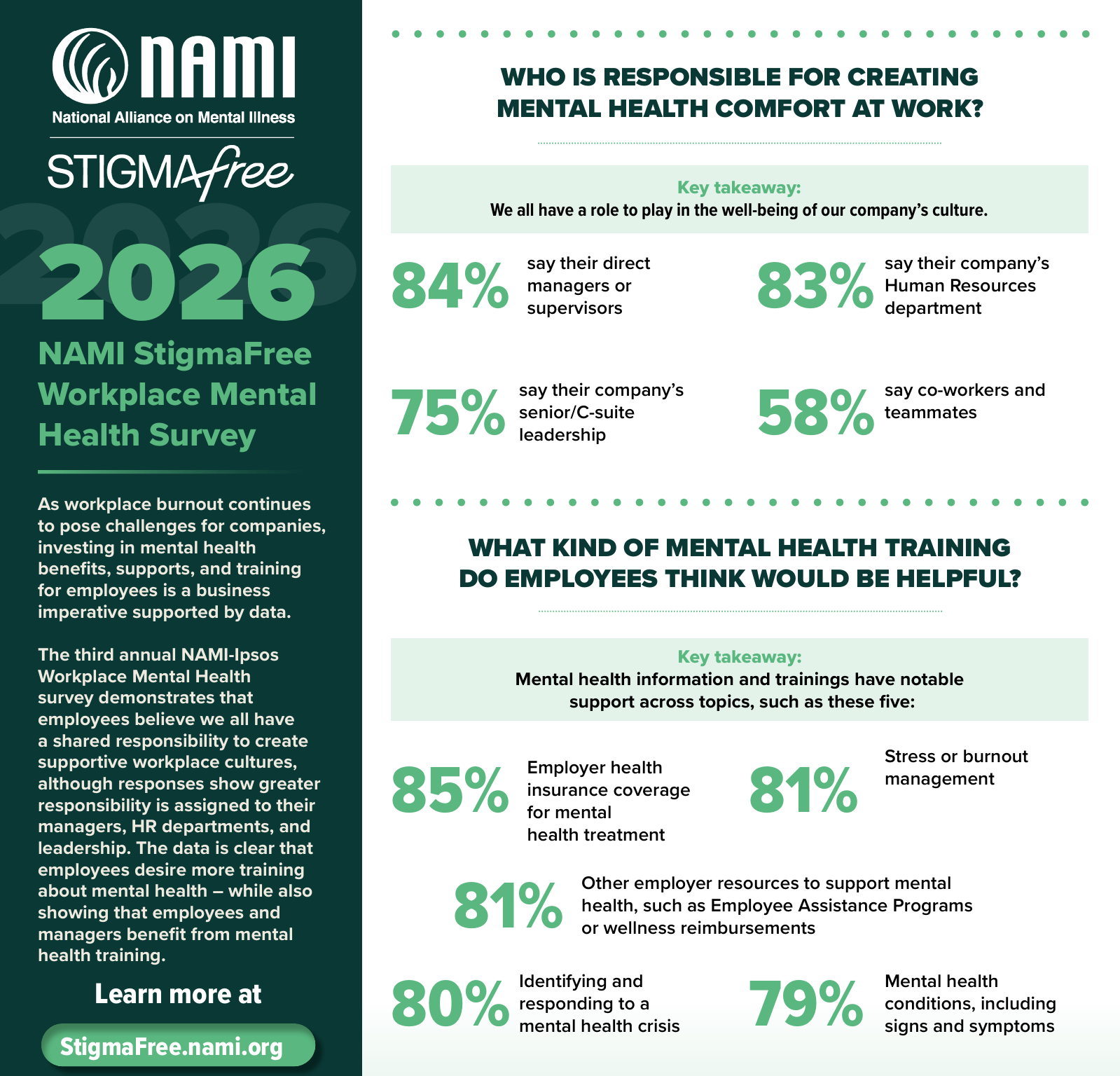
NAMI offers great resources for the workplace.
When an employer moves from "team-level habits" to "organizational strategy," the focus shifts from culture to systems. Individual resilience cannot fix a broken system; therefore, the employer’s job is to build a structural "safety net" that prevents burnout before it starts.
I work with a lot of small nonprofits (less than 25 employees), and organization support around mental wellness is a HUGE topic right now. I recently read a report by the Nonprofit Finance Fund about nonprofit worker wellbeing. Despite being the "heart of the sector," our nonprofit workforce is facing a burnout crisis that we can’t just "self-care" our way out of. Here is the reality by the numbers:
The Burnout Gap: 43% of nonprofit staff are on the edge of burnout, but only 21% of funders think it’s a big deal. That is a massive disconnect.
The Pay Reality: 1 in 5 nonprofit workers can’t even cover their basic monthly expenses. We are asking people to change the world while they struggle to pay for groceries.
Diversity at Risk: These challenges hit our Black, Global Majority, and LGBTQ+ colleagues the hardest, creating a "leaky pipeline" that drains our leadership of the very perspectives we need most.
If an employee’s brain isn't functioning optimally, the business suffers a direct hit to its core assets. In a competitive talent market, losing a skilled employee to burnout costs between 50% and 200% of their annual salary to recruit and retrain a replacement. Here are some ways to boost mental wellness at the organization level:
1. Schedule planned breaks after intense events or seasons. Large fundraising events for a small staff can be a real energy drain. Close the office for 1-2 days with paid leave after the event to support rest. You can also offer remote work as an option during certain seasons. Finally, I encourage everyone to close offices during the last week of the calendar year and pay everyone for the time.
2. Regularly discuss mental wellness at organizational events. As I mentioned before, you can say that you support mental wellness until you are blue in the face. But it doesn’t matter unless you model it. Leaders need to discuss their own mental wellness practices and share emotions. Implement a mental awareness practice (MAP) at each meeting. This could include a quick meditation or time for breathing. It will feel awkward at first, but continual practice builds skill.
3. Communicate, communicate, communicate. The healthiest organizations that I work with have a regular weekly meeting with all staff to share organization updates, celebrate individual and teams wins, and build connection points across teams. With a little planning and creativity, a weekly 30-60 minute all staff can become the best part of your week.
Resource: 2026 NAMI-Ipsos Workplace Mental Health Poll | NAMI
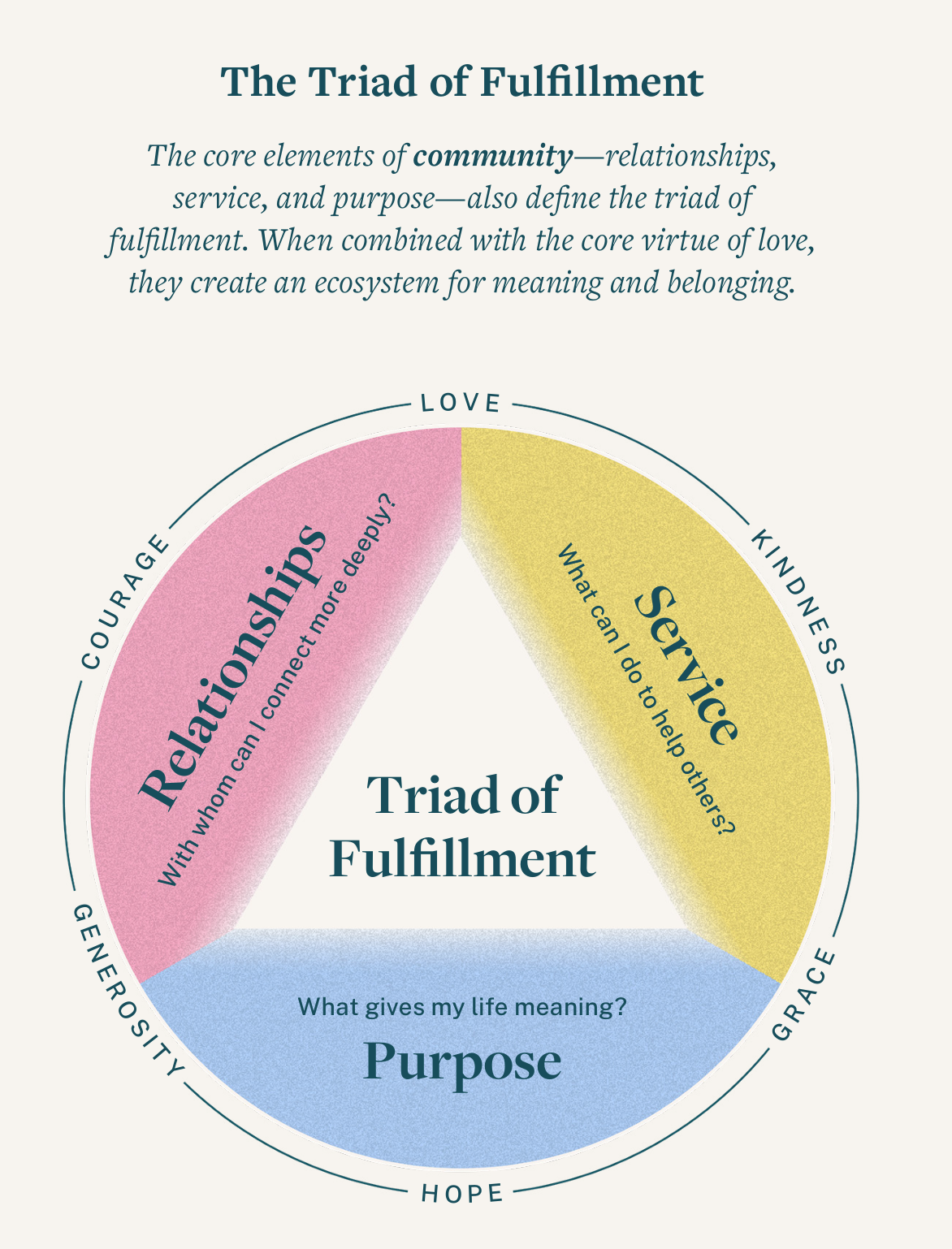
Taken from My Parting Prescription for America by Dr. Vivek Murthy.
As an HR practitioner, I fully support organization policies that support mental wellness for all employees. To support mental wellness at scale, an organization must move beyond "perks" and integrate mental health into the actual structural policies of the company. These policies are designed to reduce the chronic stressors that lead to burnout and psychological distress.
1. Expansive time off. I know companies that offer unlimited PTO, and I’ve only seen that work when supervisors regularly encourage the use of PTO. You can expand your time off policy by combining different types of paid leave (sick, vacation, personal) into a single PTO program, reducing synchronous work hours during less busy seasons, and offering flexible schedules.
2. Offer training for leaders. Two training courses that I support are Mental Health First Aid (MHFA) from the National Council on Mental Wellbeing and You Can Ask by NAMI (National Alliance on Mental Illness). MHFA is a longer training and can focus on helping adults and/or youth. You Can Ask is a free, self-paced training.
3. Strengthen your benefits. Ideally, you offer health insurance and specifically strong support around mental health access (ex. low co-payments for therapists). Annually review how many network providers are available in your employees’ geographic locations. Telehealth options are great, but not all people want to exclusively access counseling online. A great benefit is paid time off for volunteering. Service builds cognitive functioning and connections with community.
4. Promote digital self-management. Digital self-management is the practice of using digital tools and strategies to monitor, regulate, and improve habits, health, productivity, and well-being. Employees must take personal responsibility for their schedules, communication, and task completion without constant supervision. For the team, digital self-management is important so that all work and notes are accessible by the team for asynchronous work. This includes updating documents in a timely manner for review and calendars for team and organizational planning.
Resource: Parting Prescription for America by Dr. Vivek Murthy
Mental wellness in the workplace is a big topic that can feel overwhelming at times. It’s okay. We are all learning this process together. Mental wellness is a proactive state of "psychological fitness" rather than just the absence of illness. For a modern workforce, this wellness is heavily influenced by the "hardware" of biological foundations—like sleep and movement—and the "software" of self-awareness, which allows employees to move from impulsive reaction to conscious, resilient response.
By treating mental health as a core business metric and empowering managers with self-awareness and mental health literacy, organizations can build a sustainable culture of psychological safety that drives both employee well-being and long-term retention. I would love to hear what’s helping you these days. Share your thoughts in the comments.
Wanna read more? I highly recommend the following: Your Brain at Work by Dr. David Rock, Burnout: The Secret to Unlocking the Stress Cycle by Drs. Emily Nagoski and Amelia Nagoski, and Staying Human with Dr. Vivek Murthy on Substack.
Access free resources. These include a free meditation, mental health hacks for leaders, and a personal wellness workbook for an afternoon retreat.
Need a little boost to get started? Book a free 30-minute coaching call with me. No sales pitches. No commitment. Just free time to think out your next steps.