An Introduction to Human Resources for Nonprofit Leaders
Human Resources is a core operational function of daily management for an organization. The definition is literally resourcing the humans who do the work. I work with leaders all the time who have risen to executive positions with very little knowledge or experience in the deep levels of human resources (HR). That's because HR is part of many things they do, and HR is not prioritized in the organization.
This is my effort to help these leaders. It's okay to not know everything or be stumped in a difficult employee situation. Heck, I encounter new situations all the time, and I've been in HR for 30 years. The world's bend toward constant change in a hurry doesn't help. Nonprofit leaders are mostly handling multiple crises at once with very little space to recover. Add an increasing amount of employee issues, and this leader feels overwhelmed and burned out.
In this newsletter, I’ll provide a brief introduction of human resources. There is a lot to learn and keep up with, no doubt. However, you also need to know that the biggest portion of HR work is happening inside relationships. Do you remember a time when a leader or a coach believed in you and helped you achieve your best self? That’s really the definition of human resources – strong relationships that bring out the best in employees.
What is Human Resources?
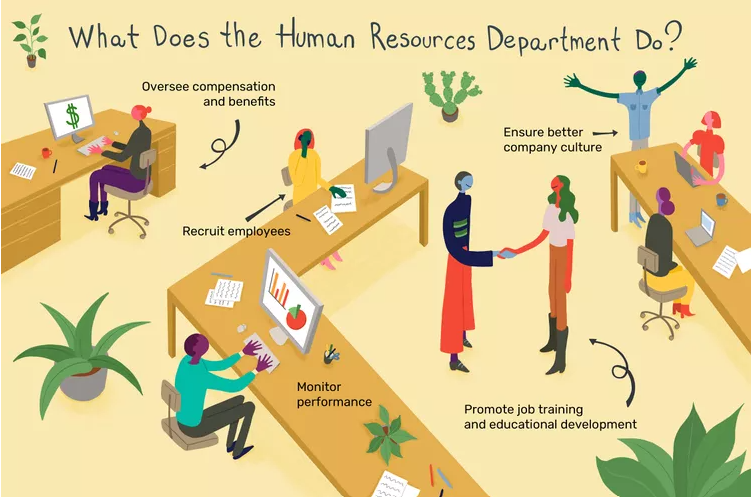
When I was studying HR in college, I used to say that HR is about hiring, firing, and helping people. While this definition may seem simple, here’s what human resources includes:
Talent Acquisition & Onboarding: Sourcing, interviewing, and selecting candidates directly, then guiding new hires through initial training and team integration.
Pay & Benefits Oversight: Coordinating salary offers, tracking time off, and managing enrollment or communication regarding available health and retirement benefits.
Performance Management: Setting expectations, conducting periodic evaluations, and offering ongoing coaching or constructive feedback directly to direct reports.
Employee Relations & Conflict Resolution: Addressing workplace interpersonal issues, mediating disputes, and handling disciplinary matters before they escalate.
Legal & Regulatory Compliance: Ensuring daily practices adhere to basic labor laws, safety standards, anti-discrimination guidelines, and proper documentation practices.
Retention & Development: Identifying growth opportunities for team members, fostering a supportive work culture, and addressing morale to minimize turnover.
Human resources is more than a function; HR is part of your organization’s ecosystem. Think of your workplace as a rainforest. What happens in one part of the rainforest impacts every part of the rainforest, even if they don’t see it. The same is true for HR. HR is the care net for the most important part of your organization – your people.
Credit: The Balance / Elise Degarmo
What Do You Believe About HR?
Before we go into the basics of human resources, we need to assess your assumptions and beliefs about your organization and people. Don’t worry – this isn’t a test, and no one will see your answers except you. We all carry internal assumptions about the workplace and different people. These come about from the way we were raised, the experiences we’ve had in the workplace, and our general outlook on life.
Assumptions can consciously or unconsciously drive how we act as leaders. Here’s an example. Have you ever worked with someone who reminds you of another person you don’t particularly like? It could be a family member, a previous coworker, or even a childhood acquaintance. It could be the way this person looks, acts, or all of the above. It’s easy for our minds and bodies to automatically react to a negative perception and project that feeling onto others.
Stepping back from the day-to-day hustle of the workplace and reflecting on how you are showing up as a leader can significantly change your approach. Here are a few reflection questions for you:
1. How would you describe your workplace to someone who doesn’t work there or even knows your field of expertise?
2. What assumptions do you have about your employees? Maybe it’s an assumption based on age, life experience, gender, or attitude. Example: Sometimes people automatically think I’m not smart when they hear my Southern accent. Little do they know!
I’m pointing this out now because a key learning in human resources is separating the person from the process. Sometimes we can assume someone’s poor performance is happening because of an assumption that we have. In reality, the poor performance is probably happening due to a variety of issues at the individual, team, and organization level.
I encourage you right now to commit the time to build relationships with everyone in your organization. The depth and breadth of these relationships will vary, but you as leader must invest in and maintain these relationships as the culture of your organization. Fortunately, or unfortunately, leaders have the most influence on the employee experience while typically having the least amount of time. Welcome to leadership!
The Human Resources Cycle
Now let’s get into the basics of human resources. As I mentioned before, I see organizations as a living ecosystem – like a rainforest. Human resources are part of the root system – mostly underground and interconnected with the whole system. The roots support the growth of the entire forest. That’s human resources.
If you think human resources take a lot of time, then you're right!
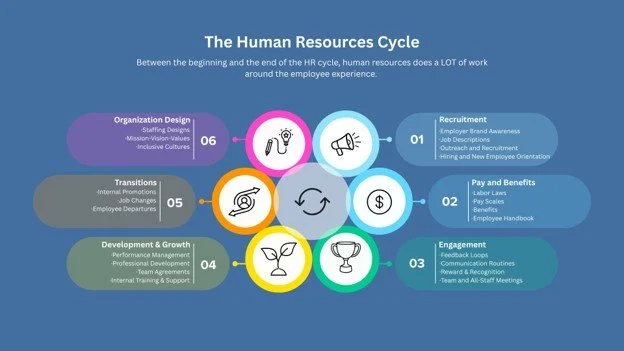
HR work is always happening inside the organization, so I like to present it as a cycle. Typically, the cycle begins by recruiting a new employee and ends when that employee is promoted, changing jobs, or leaving the organization. Between the beginning and the end, human resources does a LOT of work around the employee experience. Let’s look at the core elements of HR.
Recruiting
· Employer Brand Awareness: acts as your organization’s public reputation, helping job seekers quickly understand your mission and culture so you can attract passionate, high-quality candidates without spending a fortune on recruitment.
· Job Descriptions: serve as the foundation for successful employment by setting clear expectations, ensuring fair evaluation, and protecting your organization from legal misunderstandings.
· Outreach and Recruitment: the proactive process of finding, engaging, and persuading qualified individuals to apply for open positions within your organization.
· Hiring and New Employee Orientation: the structured journey of selecting the right candidate for a role and integrating them into your organization so they have the tools, knowledge, and support needed to succeed from day one.
Pay and Benefits
· Labor Laws: the federal, state, and local legal rules that govern the relationship between employers and workers, ensuring fair wages, safe working conditions, and protection against discrimination.
· Pay Scales: a structured framework that sets clear salary ranges for different jobs based on experience, responsibilities, and market value to ensure fair and consistent pay across your organization.
· Benefits: the non-wage rewards and perks provided to workers—ranging from health insurance and retirement plans to flexible hours and paid time off—that support their well-being and boost job satisfaction.
· Employee Handbook: serves as both a legal document and a cultural artifact by outlining mandatory workplace policies to protect your organization while communicating the shared values, expectations, and spirit that define your team.
Engagement
· Feedback Loops: an ongoing, two-way communication process where staff share their insights and concerns with leadership, and management listens, acts, and communicates back to drive continuous workplace improvement.
· Communication Routines: the predictable, recurring ways a leadership team shares updates, listens to staff, and checks in on progress to keep employees informed, valued, and connected to the mission.
· Reward & Recognition: the practice of acknowledging and celebrating individual or team achievements through praise, awards, or spot bonuses to show staff their specific efforts are seen and valued.
· Team and All-Staff Meetings: scheduled gatherings that bring employees together to align on goals, share key updates, build camaraderie, and ensure everyone is moving in the same direction.
Development & Growth
· Performance Management: the continuous process where managers and employees work together to set goals, track progress, provide ongoing feedback, and support professional growth so everyone can perform at their best.
· Professional Development: the continuous process of acquiring new skills, knowledge, and certifications to help employees grow in their careers and better support the organization's goals.
· Team Agreements: shared guidelines created by a team to establish clear norms for how members communicate, make decisions, collaborate, and resolve conflict together.
· Internal Training & Support: the targeted instruction provided by an organization to teach staff the specific tools, procedures, and practical skills required to perform their current job duties effectively and safely.
Transitions
· Internal Promotions: the practice of advancing a current employee into a higher-level position with greater responsibility, authority, and pay based on their demonstrated skills and performance within the organization.
· Job Changes: any formal shift in an employee's role, duties, work schedule, or reporting line within an organization, which can happen through a transfer, lateral move, or redefinition of current responsibilities.
· Employee Departures: whether through voluntary resignation, retirement, or termination, an employee departure is the official ending of the employment relationship, which requires a structured transition to reassign work and offboard the individual smoothly.
Your job as a leader is seeing the whole cycle for each of your employees and teams. While you may focus on one element more often than others, the entire cycle represents your employee experience. Sometimes I see leaders look at this cycle and just express frustration that they don’t have time or capacity for all of this. I get it. I work with nonprofits of all sizes, but mostly with ones that don’t have any internal HR support. It’s really hard to lead the organization, build a people-positive culture, and manage your own workload at the same time.
Where Should I Start?
If you feel overwhelmed, don’t worry. This newsletter is designed to educate you and provide resources for you to strengthen your human resources in your own way on your own timeline. My advice is start small. Focus on building or improving one big thing at a time. Then go from there. The saying “Rome wasn’t built in a day” may have been an early HR reference. Just kidding.
A great starting place is your legal compliance. We have workplace laws at the federal and state level; some areas even have laws at the local level (typically around pay and leave). These workplace laws are the baseline for your workplace. Most of these laws should be in your employee handbook. I’ve included a sample handbook for your reference.
Review the sample handbook and see if you are missing anything. Here is a list of things that I typically see in my work with nonprofits. These are crucial items that can cause serious legal trouble quickly.
· Lack of distinction between part-time and full-time employees
· Lack of clarity around contractors versus employee status
· Misunderstandings around timekeeping and overtime pay
· Too many procedures in the handbook versus just policies
· Vague job descriptions
When I was a human resources manager for a local nonprofit, I would block time in my January calendar to update our labor law posters (which are free on government websites) and see what employment laws had changed in the last year. You can search for this information on the internet. If you operate in a remote workplace, then you can upload your labor law posters to a shared space for everyone to access.
Another great resource is the NC Center for Nonprofits, specifically their weekly legislative update, which includes any proposals around state labor laws. At the federal level, the US Department of Labor is a starting resource. It’s good practice to have a lawyer on your board and/or have an employment lawyer that you can call for sticky situations.
Want to Learn More?
This is just an introduction to the knowledge and reflective practices you need as a leader who manages humans. If you want to learn more, then I am providing several links for you below. However, you may be more interested in connecting with other leaders in a safe space with an HR expert that you know and trust. Enter my new offering - The Nonprofit HR Cohort.
The Nonprofit HR Cohort is designed for Executive Directors and other senior leaders who do not have internal HR departments who are looking for peer connection and HR expertise. In this cohort, I'm offering 6 monthly virtual group sessions where we will discuss these topics:
· Setting the Stage: Human Resources (HR) as part of your role
· The Framework: Legal Compliance and Cultural Approach
· Starting with the Big Stuff: Pay and Benefits
· The Elephant in the Room: Performance Management
· Meetings, Communications, and Team Development – Oh My!
· Transitions
Each monthly session will include a small teaching about the topic and then turn into a facilitated discussion around your particular needs at this time. Additionally, each organization in the cohort will receive 6 individual coaching sessions with me to ensure confidentiality and customized solutions. The total cost is $2500, and the first cohort starts mid-January 2027.
If you are interested, then email me. I will reach out to share more details and hear your needs. To start in January 2027, I need to hear from you by December 1, 2026. The cohort will include 8-10 nonprofit organizations.
Additionally, here are some other resources to help you on your HR journey.
A Leader’s Guide to Goal Setting and Personal Renewal | LinkedIn
Navigating Conflict in the Workplace: It's a Whole New World, Y'all | LinkedIn
"We need to update our employee handbook. Anyone want to take the lead on that?" | LinkedIn
Revolutionizing Performance Management | LinkedIn
The Supervisor Unicorns: Do They Really Exist? — Loftis Partners